
If you have ever heard someone say they did cath for my father, or he is going for an angiogram, and quietly wondered whether that means opening the chest with a saw like they do on a Nollywood set, relax. Nobody is cracking anyone’s ribcage for this one. Cardiac catheterization, popularly shortened to cath, is one of modern medicine’s quiet miracles, and it is far less dramatic, and far less scary, than most people imagine.
What Exactly Is a Cath Procedure?
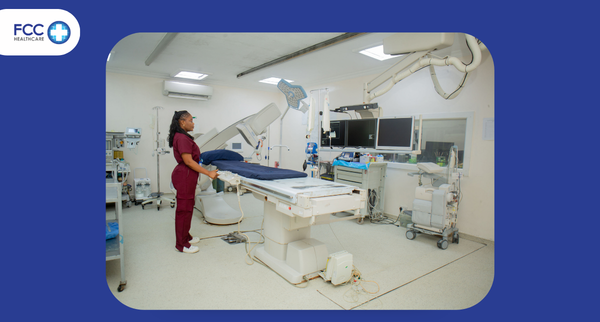
Cardiac catheterization, or cardiac cath, is a procedure that helps a doctor diagnose a heart problem by threading a long, thin, flexible tube called a catheter through a blood vessel, usually starting at the groin or the wrist, all the way up to the heart. Once the catheter is in position, a contrast dye is released, and X ray imaging captures exactly where the coronary arteries are narrowed or blocked. This dye travels through the catheter and lets doctors take clear pictures of the coronary arteries under X ray guidance, usually after the catheter has been guided in a path from the femoral artery back up to the origin of those vessels.
Here is the important distinction most people miss. A heart catheterization on its own is purely diagnostic. It tells the doctor what is going on inside your arteries, while any actual fixing of a blockage, such as placing a stent, is a separate treatment step that follows once a problem is confirmed. In plain terms, the cath is the doctor checking the pipe, and the angioplasty and stent are the plumber fixing it.
Enter Angioplasty and the Famous Stent
So the doctor finds a blockage. What next? A procedure called percutaneous coronary intervention, which many people still call angioplasty with stent, is performed to open the narrowed artery. After a local anaesthetic, the doctor threads a small wire through the affected artery, guides a deflated balloon into place, and inflates it so the pressure pushes the fatty deposits against the artery wall, creating more room for blood to flow. If a stent is being placed, it happens at this same moment. A stent is essentially a tiny mesh scaffold left behind to prop the artery open, much like the metal supports keeping a collapsing zinc roof from caving in.
How long does this actually take? A cardiac cath that is purely diagnostic and just examining the coronary arteries typically takes about thirty minutes, though the exact time depends on what the procedure is trying to achieve. You should plan for the preparation and recovery time to stretch the whole hospital visit to anywhere from five to nine hours or more, even though you will likely be awake through the actual procedure.
Is It Painful? Is It Dangerous?
Most patients describe it as uncomfortable rather than painful. You may feel a warm, flushed sensation when the contrast dye is injected, and some patients do feel chest discomfort during parts of the procedure, after which you are moved to a recovery room to be monitored. Serious complications are relatively uncommon in experienced hands, though patients are always warned to watch for warning signs at the puncture site afterward. Signs that need urgent attention after the procedure include redness, pain or discharge from the incision site, chest pain or breathlessness that does not go away with rest, an irregular or unusually fast or slow pulse, dizziness or fainting, or fever.
Success rates, even in more delicate cases, tend to be encouraging. In one review of children who needed catheter based interventions after heart surgery, stent based angioplasty achieved a ninety percent success rate and shunt occlusion procedures achieved a full success rate, with no deaths recorded during any of the catheterization procedures themselves. This is a strong testament to how far this keyhole approach to fixing the heart has come.
Why Nigerians Should Care About This Beyond the Big Hospitals in Lagos and Abuja
Access is, honestly, still the elephant in the room. Cath labs remain concentrated in a handful of tertiary and private hospitals across the country, and the cost can be steep for the average family without insurance. But awareness matters just as much as access. Many Nigerians who eventually need a cath procedure only find out they have significant blockages after a frightening chest pain episode lands them in the emergency room. A Lagos hospital review spanning sixteen years found that stroke, heart failure, hypertensive disease and acute coronary syndrome made up over half of all cardiovascular admissions on the wards, several of which could have been caught earlier with a simple cath referral if the warning signs, such as persistent chest pain, unexplained breathlessness and palpitations, had been acted on sooner.
Hypertension alone has been calculated to contribute to roughly thirteen percent of all myocardial infarction cases and close to a quarter of all strokes in Nigeria, both of which are exactly the kind of conditions a timely cath procedure, angioplasty or stent can help manage before they become fatal.
The Bottom Line
A cath is not a death sentence, and it is not some frightening foreign operation reserved for the rich abroad. It is a long tested, relatively quick way for doctors to look inside your heart’s plumbing and fix what needs fixing, often without a single major incision. If your doctor recommends one, do not run. Ask questions, understand the risks and benefits, and remember that an unblocked artery today is a heart attack or stroke avoided tomorrow.